Laser bismark chain coupling machine for cable chains-Colombia 2026
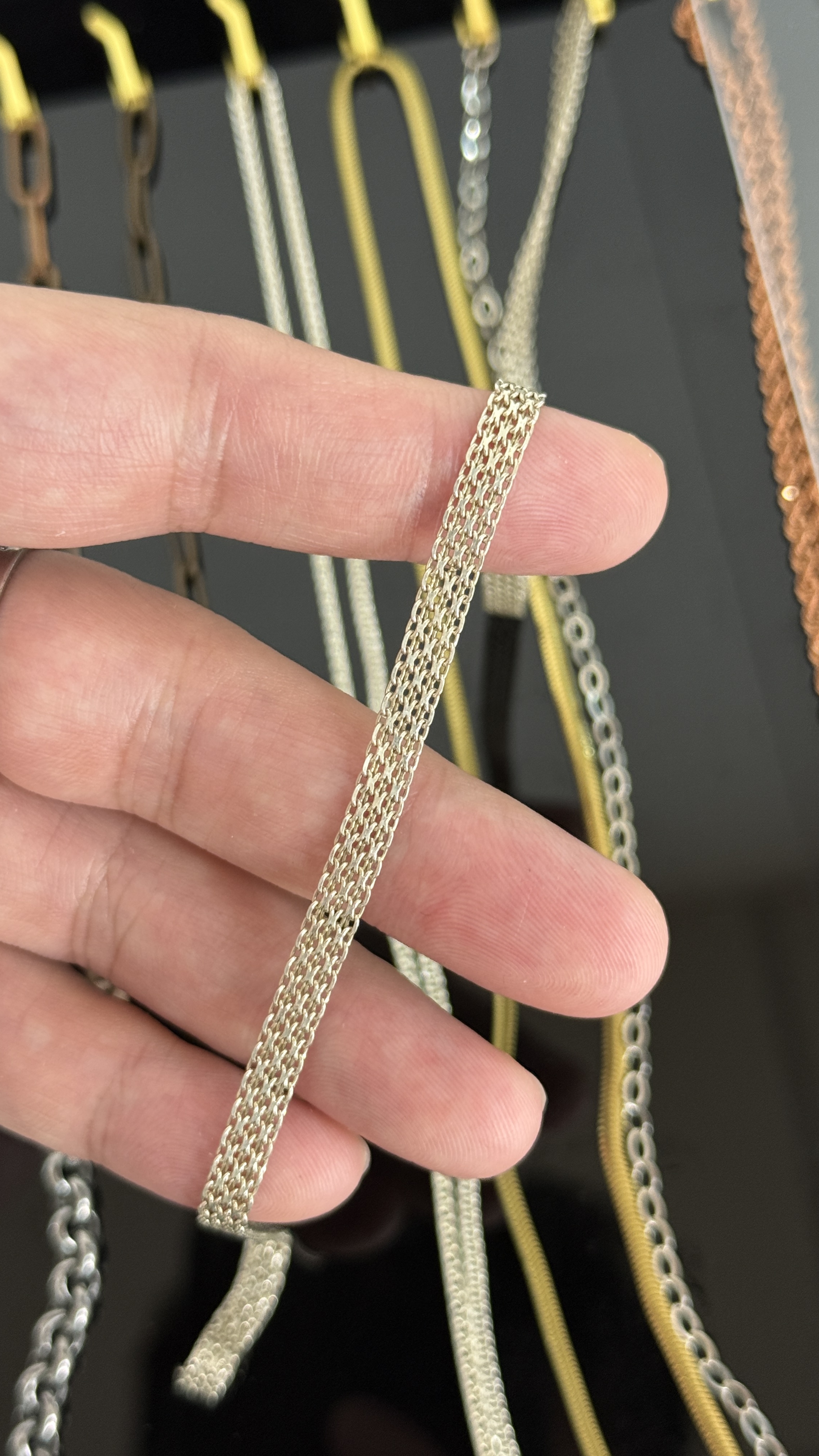
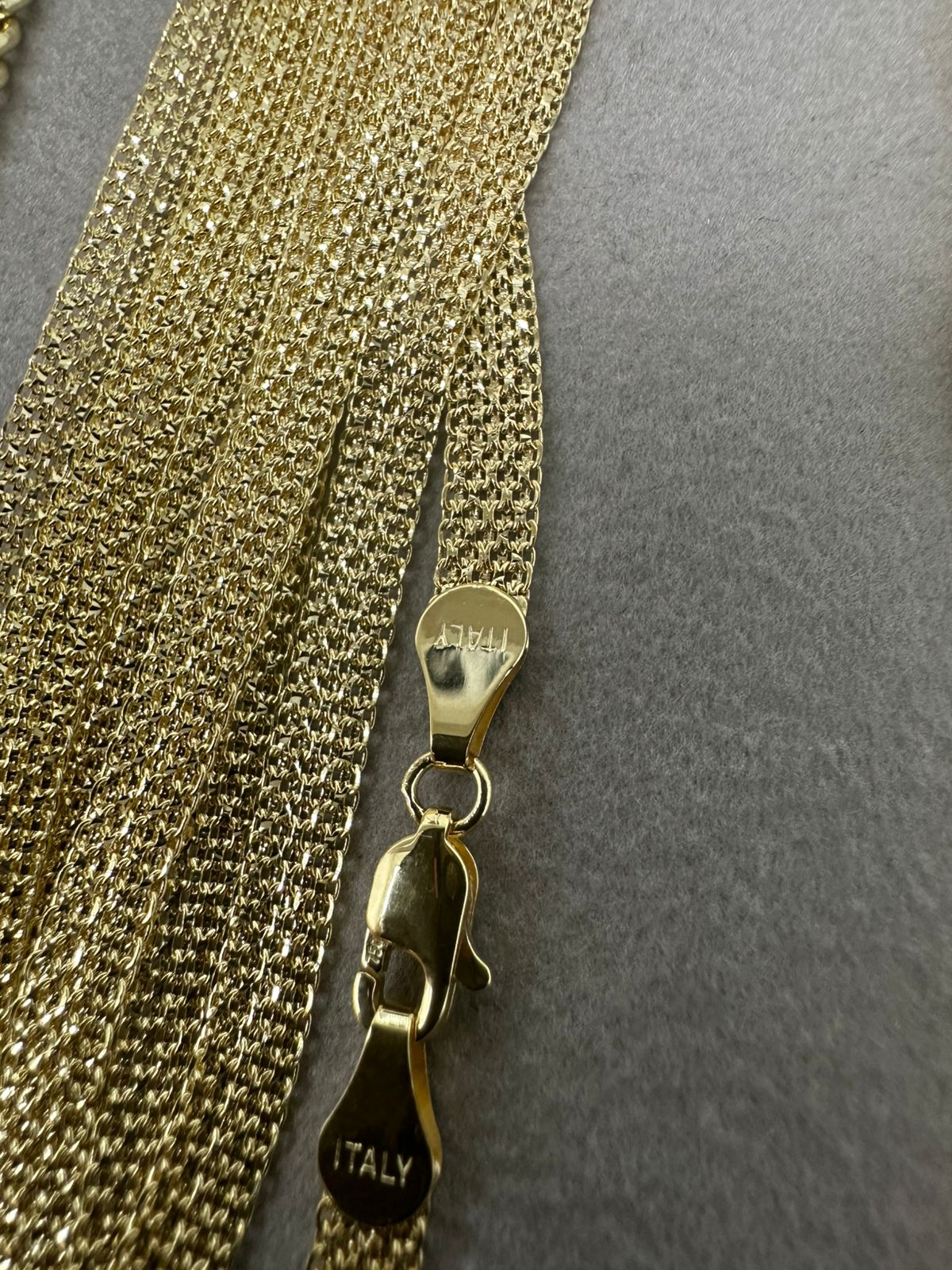
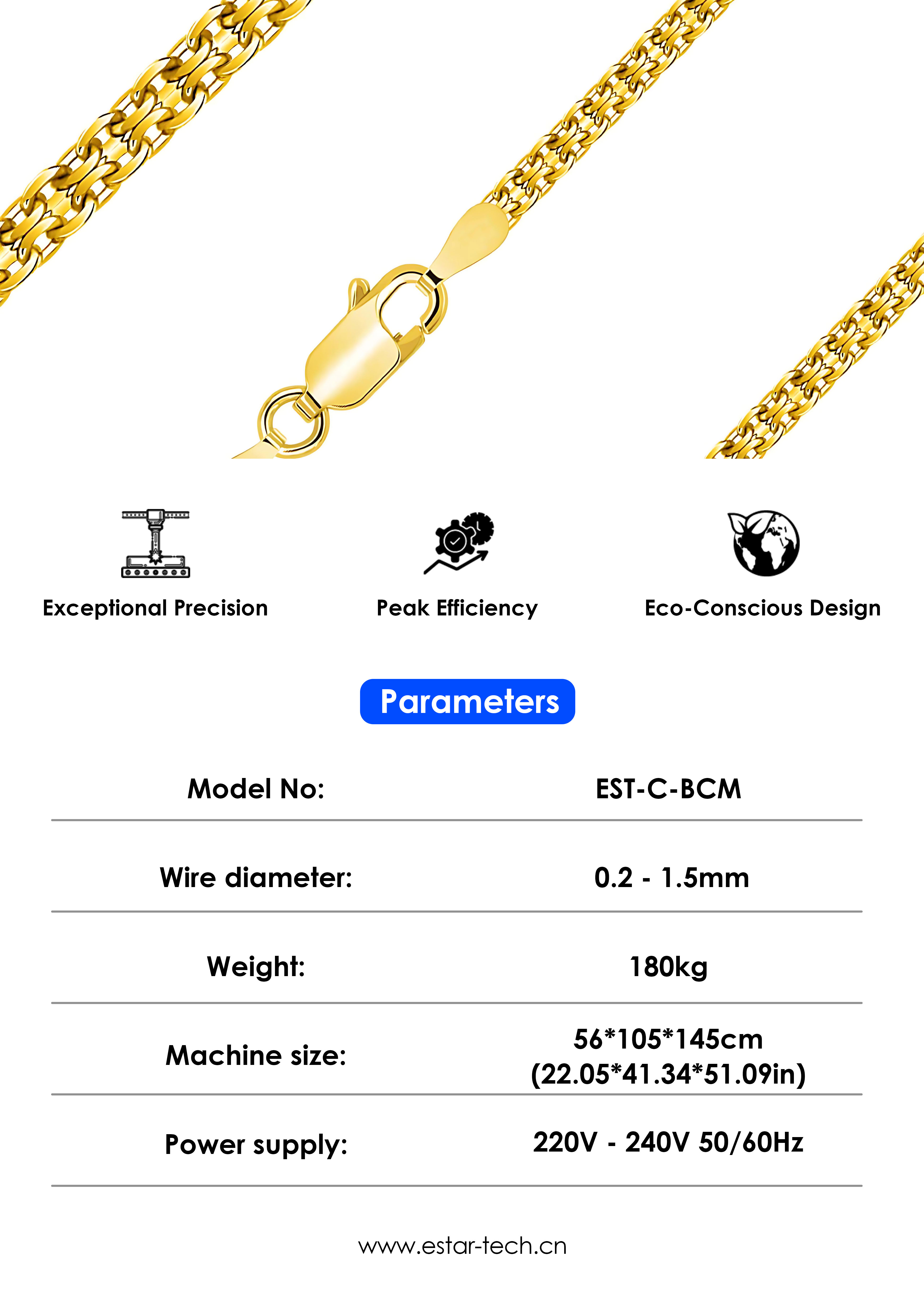
The Bismark machine is not a single-chain forming machine. Its core function is to precisely align and weld 2 to 8 parallel thin metal chains (such as Curb chains, box chains, cable chains, ball chains, and other precious metal semi-finished single chains) at fixed points to form a wide multi-layer Bismark tightly woven necklace/bracelet. It is also known in the industry as a multi-chain coupling welding machine, with full PLC automatic closed-loop control throughout the process.
 |
 |
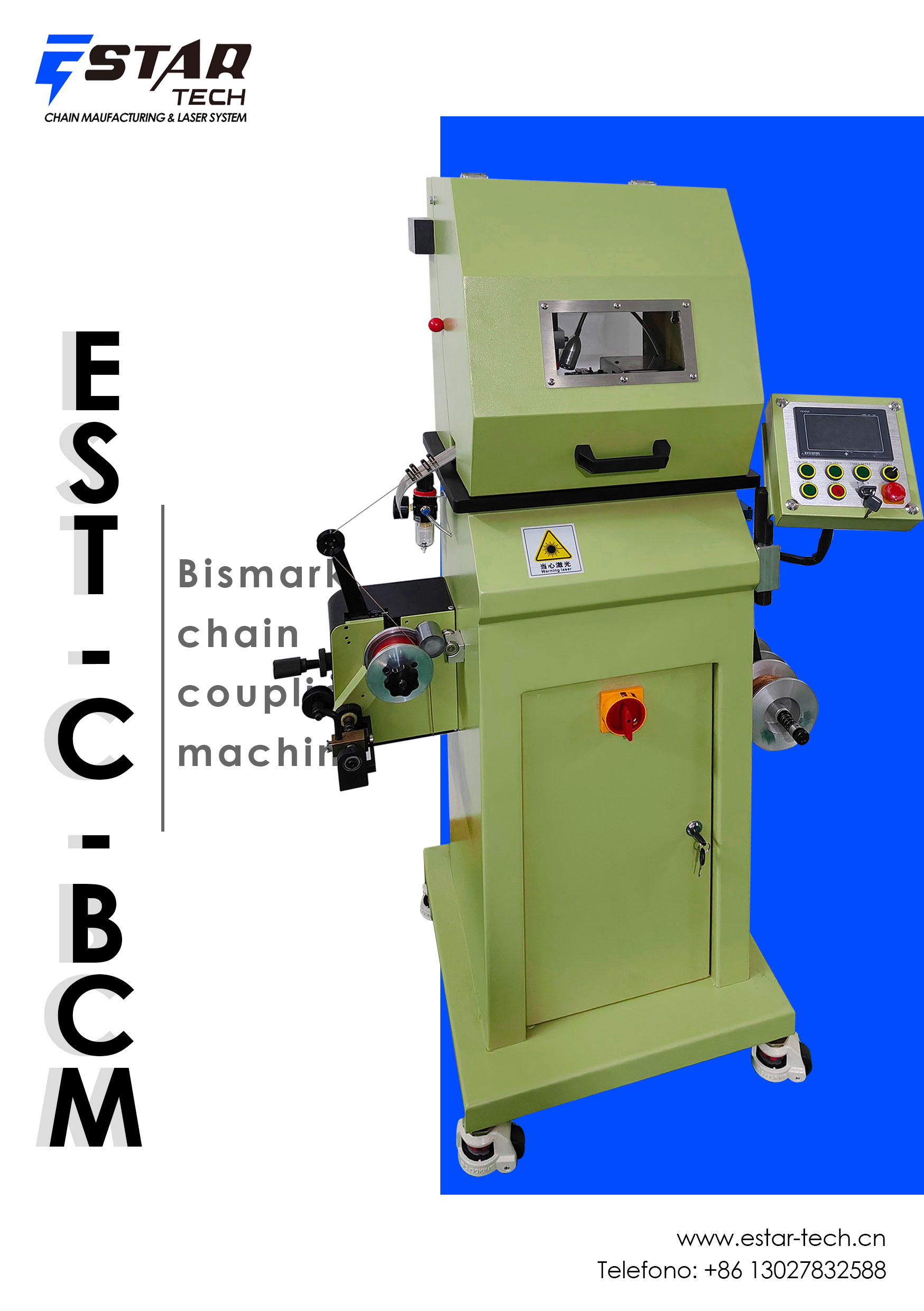
II. Core structure of the complete machine
Constant tension unwinding mechanism: Equipped with multiple sets of material trays, it can unwind multiple independent semi-finished plain chains; equipped with tension sensors to avoid uneven tension, misalignment, and deviation of the chains
Customized centering and positioning feed module: pneumatic/mechanical positioning slot, material pushing claw, automatic chain pitch correction system
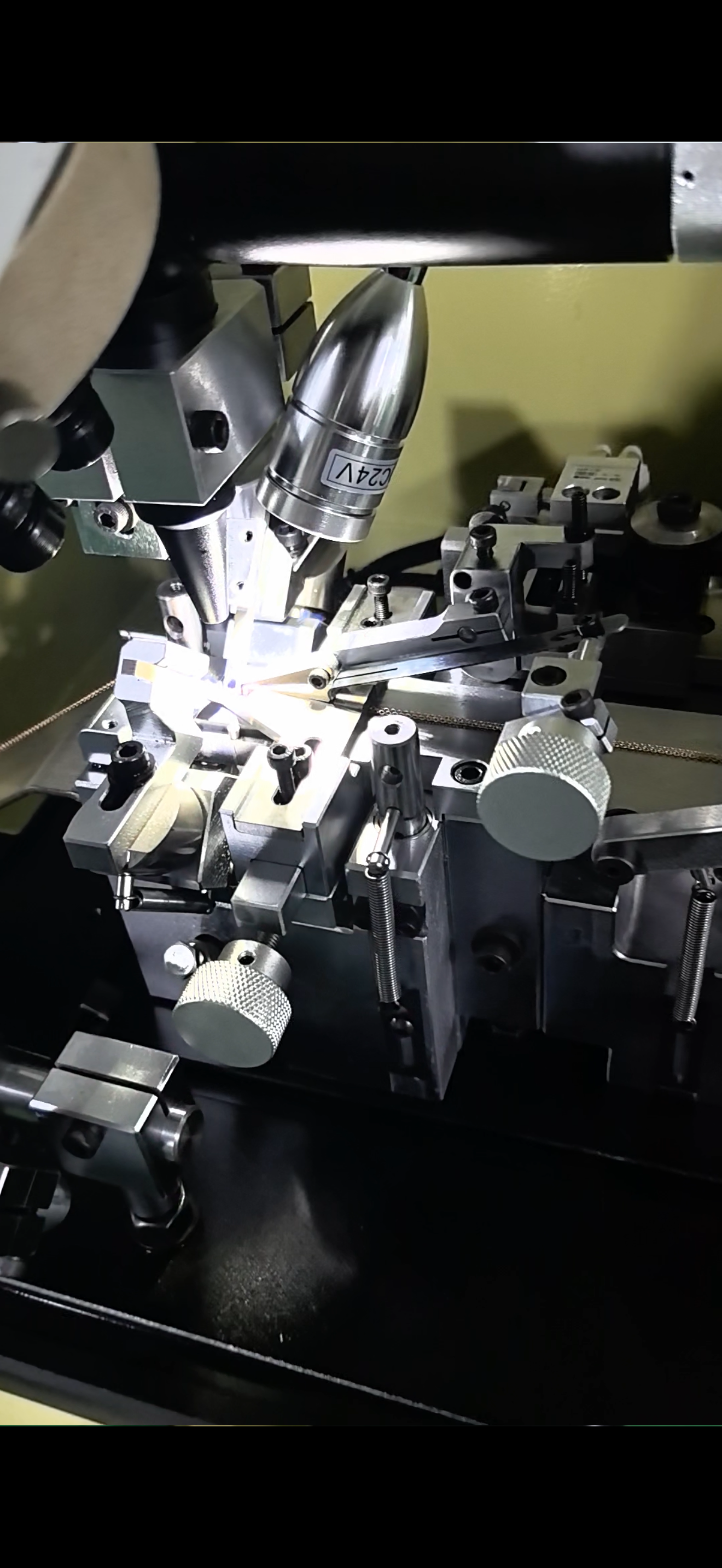
Welding execution unit: fiber laser generator
Visual observation module: binocular microscope (for observing solder joints)
PLC touch control system: controls feed rate, welding interval, power, and takt time
Fault sensing and winding mechanism: automatic stoppage in case of material shortage, misalignment, and chain breakage, with a finished product winding disc maintaining constant tension
 |
 |
III. Complete automated workflow (step-by-step principle)
1. Multi-chain synchronous feeding and constant tension correction
Multiple pre-formed single precious metal thin chains (gold/silver/platinum/stainless steel) are separately loaded on independent reels, with a motor cooperating with damping to continuously output a constant pulling force to prevent the chains from stretching or twisting.
The chains enter the self-centering guide slot, with multiple chains arranged closely and horizontally side by side. The built-in pitch correction sensor compares the chain link spacing of each chain in real time. When misalignment occurs, the servo motor fine-tunes the feed speed to ensure that all chain links are perfectly aligned, preparing for welding.
2. Step positioning and fixed-point clamping
The PLC outputs pulses at a preset step distance, and the pneumatic push claw steps forward one chain link of the parallel chains. Upon reaching the welding station, the pneumatic fixture instantly clamps and secures multiple chains, eliminating minor movements and locking the welding position.
Programmable settings: continuous full welding (entire chain is fully welded and secured), intermittent spot welding (segmented welding to form a pattern)
3. Welding principle:
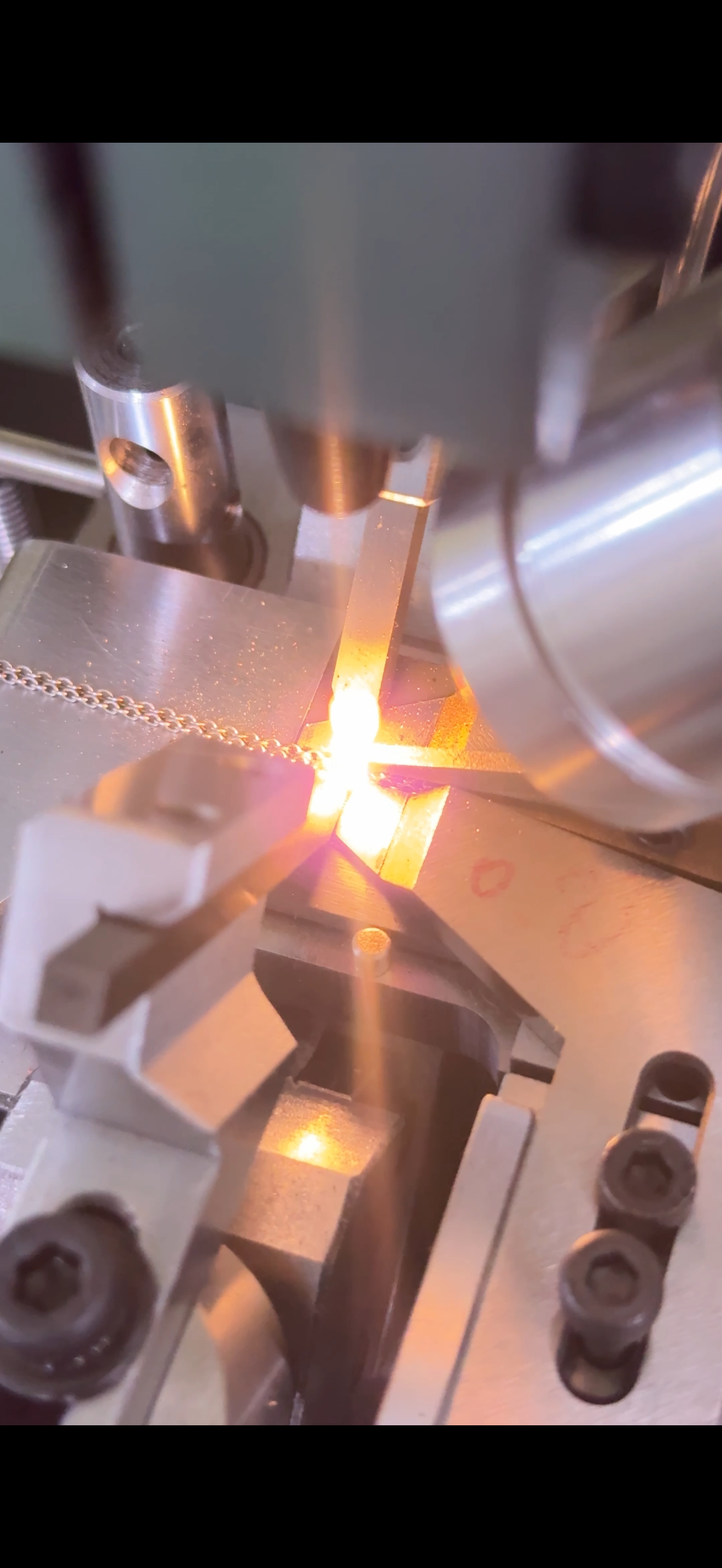
The fiber laser generator outputs high-energy focused spots, eliminating the need for additional solder (self-melting welding);
The laser precisely strikes the overlapping position of multiple layers of chain links, instantly melting the metal body locally, and integrating after cooling;
The heat-affected zone is extremely small, with no deformation of the chain and no burns on the surface, and the welding points are smooth and shiny;
Up to 600-800 solder joints per minute, with fine lines of 0.2-0.6mm, making it the preferred choice for light luxury and fine models. Equipped with a binocular microscope for real-time observation of tiny solder joints.
4.Samples: